
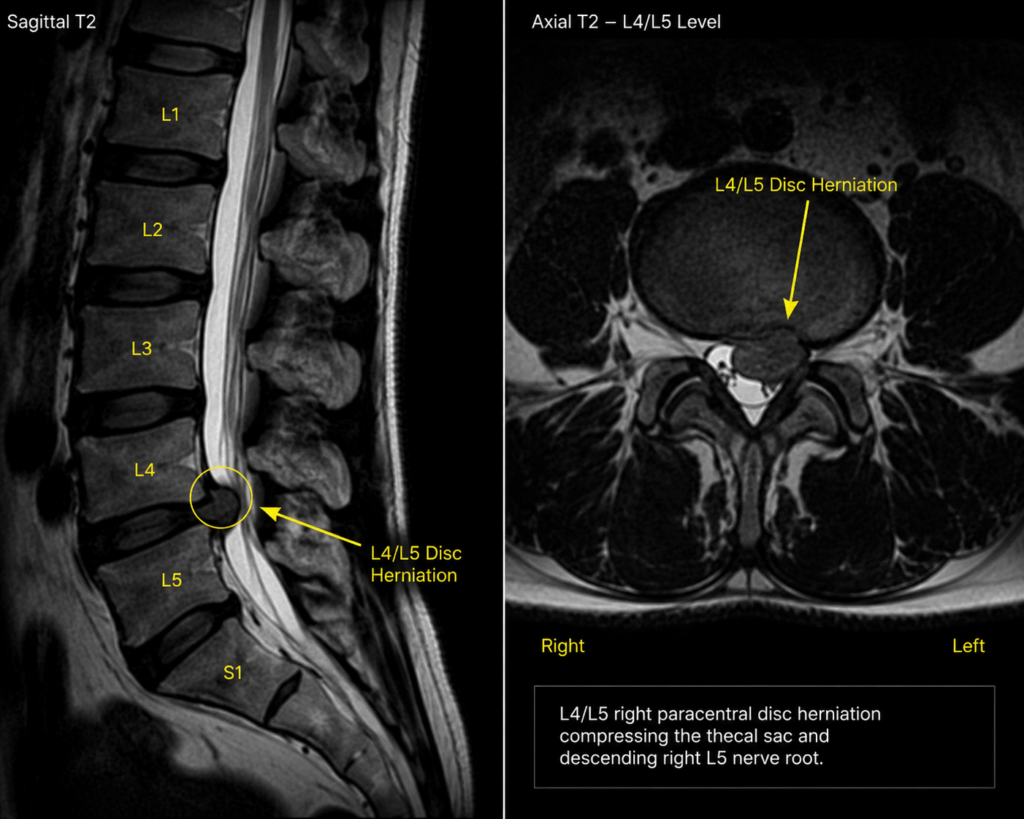
Why Doesn’t an MRI Explain My Herniated Disc Pain?
Have you ever been told, “Your MRI shows a herniated disc… degenerative changes… but somehow, it doesn’t fully explain your pain? Even more confusing, some people with severe-looking MRIs have no pain at all. Why?
The reason is simple: MRIs show structure, not pain. Many “abnormalities” appear in people without symptoms, so a bad-looking scan doesn’t always mean you’ll hurt—and pain can exist even when imaging looks normal. Pain is more complex than physical damage. It’s strongly influenced by the nervous system, which acts like an alarm. Sometimes it signals real injury, but it can also become overprotective and trigger pain without serious harm. Stress, poor sleep, fear of movement, past injuries, and inactivity can all increase this sensitivity.
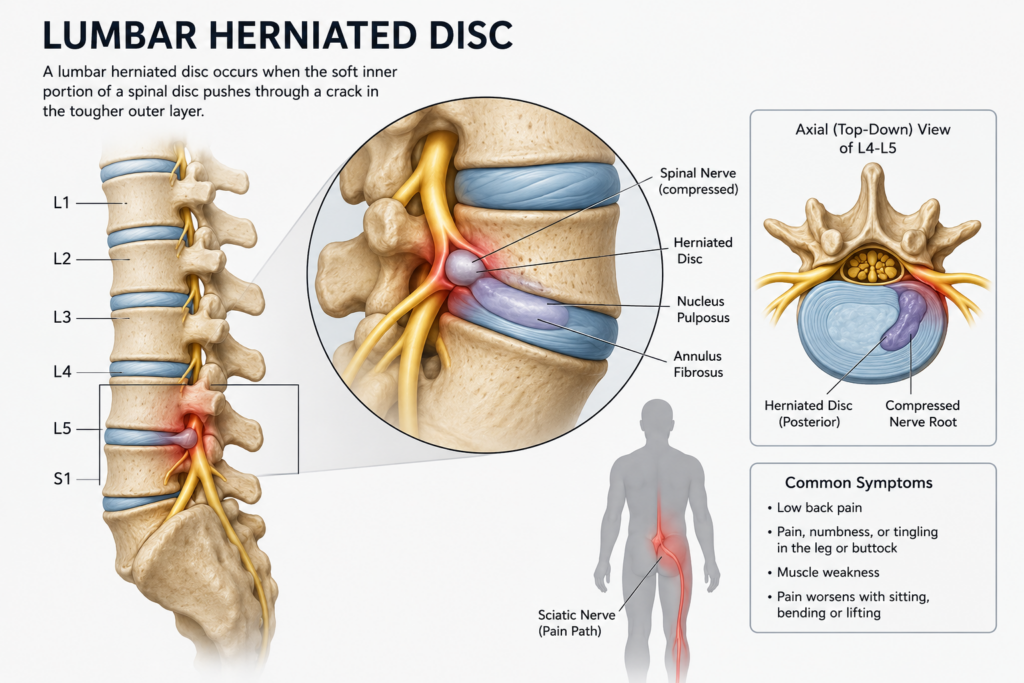
Focusing too much on MRI results can backfire. Terms like “degeneration” or “wear and tear” can make people feel broken, leading them to avoid movement. This often creates a cycle of stiffness, weakness, and more pain. What helps is a more active, informed approach. Gradual movement, building strength and mobility, and understanding pain can all reduce symptoms—even if the MRI doesn’t change. Consistency matters more than quick fixes. Instead of asking what’s wrong with your MRI, focus on what your body can still do and how to rebuild confidence and strength. An MRI is just one piece of the puzzle—not the whole story.