
Do I Have Whiplash? What To Do After a Car Accident.
Have you recently been in a car accident, experienced a whiplash type injury and you’re wondering what to do next?
Even if the accident seemed minor, it’s important to understand that whiplash injuries can occur at surprisingly low speeds and symptoms don’t always show up right away.
Today, I’m going to explain what whiplash is, what you should do immediately after an injury, and how to give yourself the best chance at a speedy and full recovery.
First, let’s talk about what whiplash actually is.
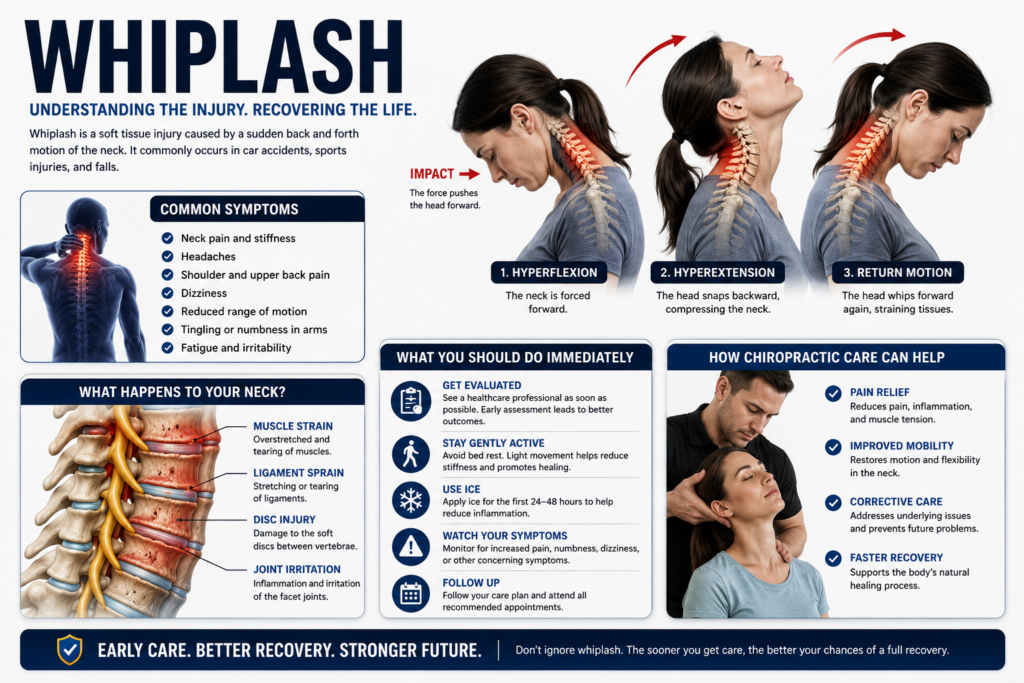
Whiplash occurs when the head is suddenly thrown forward and backward, placing tremendous stress on the muscles, ligaments, joints, and discs of the neck. This rapid motion can cause inflammation, muscle spasms, joint irritation, and can damage the supporting structures in the cervical and thoracic spine.
One of the biggest mistakes people make is assuming they’re okay because they don’t feel pain immediately. It’s very common for symptoms to take hours or even days to develop. You may initially feel fine, only to wake up the next morning with neck stiffness, headaches, shoulder pain, dizziness, or reduced range of motion.
So what should you do immediately after a whiplash injury?
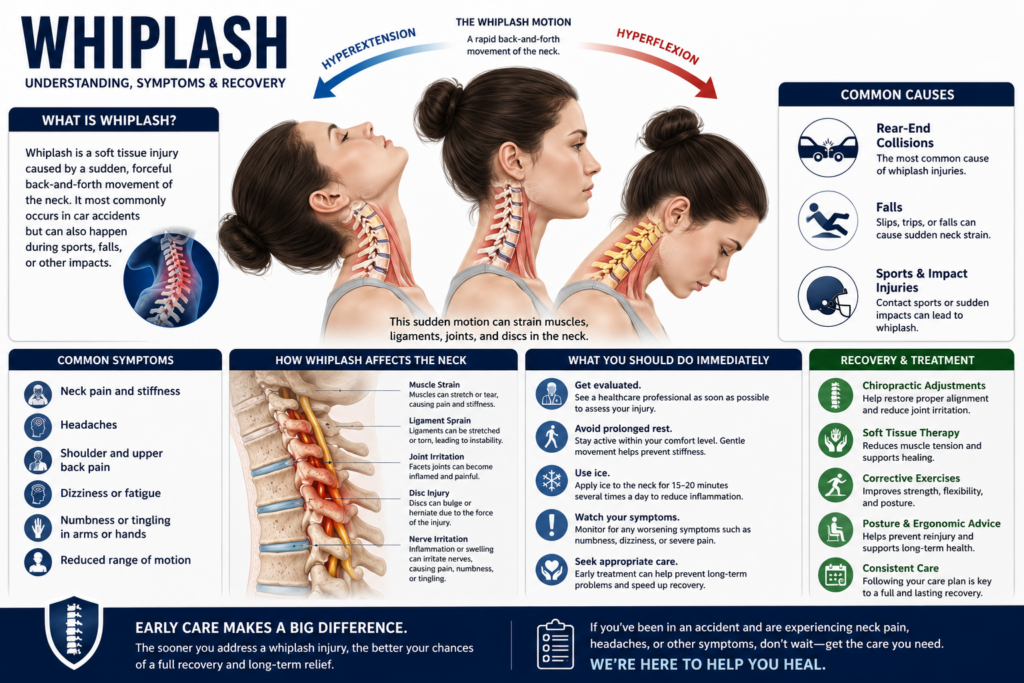
First, get evaluated by a chiropractor as soon as possible. Early assessment can help identify injuries and document your condition before symptoms worsen. The sooner we can properly diagnose and get a patient on the right treatment path the better the long term results.
Second, avoid the temptation to simply “wait it out.” Numerous Research studies have shown that early intervention leads to better outcomes than prolonged inactivity. Now in many cases rest may be appropriate but by incorporating the proper treatment recommendations the recovery time goes way down.
Third, movement is the key to proper recovery and we want to keep moving within your comfort level. Complete bed rest is usually not recommended. Gentle, recommended movement helps maintain mobility and can reduce stiffness.
Fourth, pay attention to your symptoms. Some red flags to Watch for include… increasing pain, numbness, tingling into the arms/hands, weakness, severe headaches, dizziness, or any symptoms that seem to be getting worse.
As the initial inflammation begins to calm down, rehabilitation becomes extremely important. The goal isn’t just pain relief—it’s restoring proper movement, strength, and function.
This is where chiropractic care can help. A comprehensive approach can include spinal adjustments, soft tissue therapy, corrective exercises, posture training, and mobility work designed to support the healing process and restore normal movement patterns.
The biggest mistake I see is people ignoring their symptoms until they become chronic. Untreated whiplash injuries can sometimes lead to long-term neck pain, headaches, reduced mobility, and ongoing discomfort.
The sooner you address the problem, the better your chances of recovering fully and returning to your normal activities.
If you’ve recently been in an accident and you’re experiencing neck pain, headaches, stiffness, or other symptoms, please don’t ignore the warning signs. Get help, get proper treatment recommendations and get on the road to recovery.