
Can a Herniated Disc Heal without Surgery?
Can a Herniated Disc Heal?
Have you been told you have a herniated disc? Maybe your MRI showed a disc bulge or herniation, and now you’re wondering, “Will this ever heal?” Or does it automatically mean surgery? The good news is that many herniated discs improve over time, and many people recover without surgery. But there’s an important difference between a disc healing and your symptoms improving.
In this article, I’ll explain what a herniated disc is, whether it can heal, and what you can do to give your body the best chance of recovering
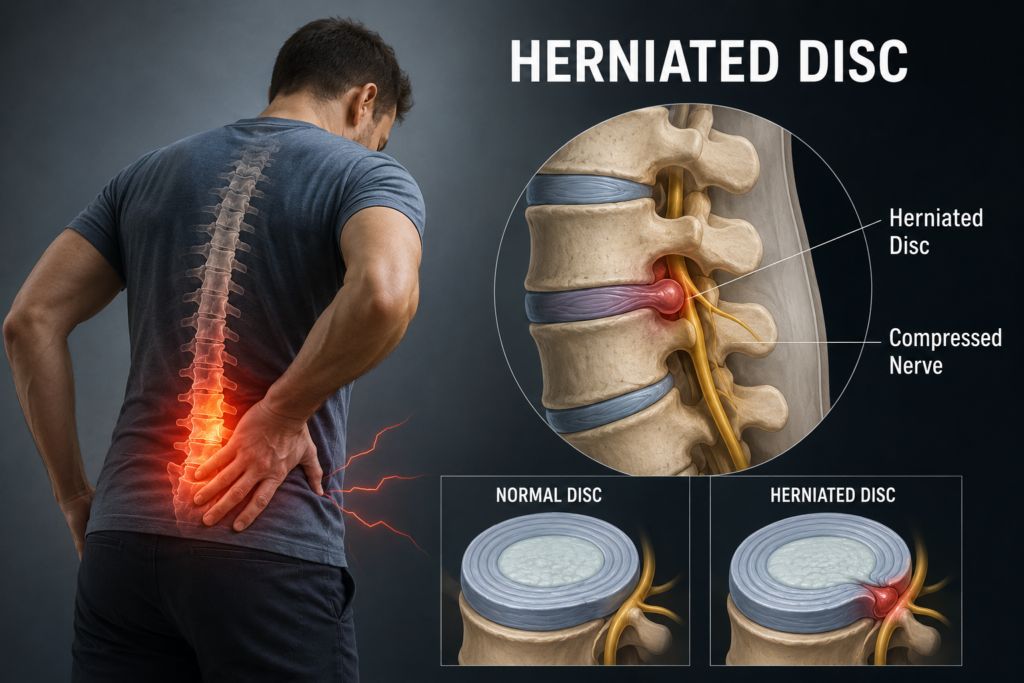
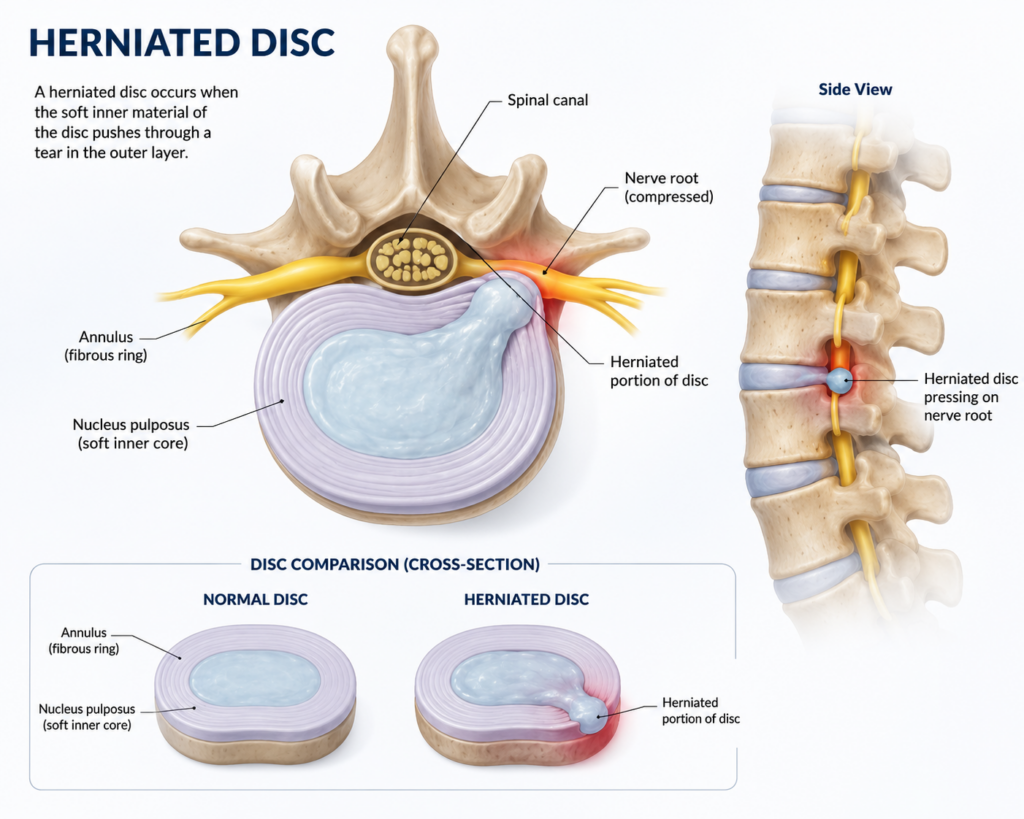
First, let’s understand what a herniated disc actually is. Between each vertebra is a spinal disc that acts like a shock absorber. It has a tough outer layer and a softer, gel-like center.
A herniated disc occurs when the outer layer weakens or tears, allowing some of that inner material to push outward. Think of a jelly doughnut… if you squeeze that doughnut and the jelly pops out that would be the equivalent of a herniation. If that material presses on a nearby nerve, it can cause symptoms like back pain, pain shooting into the leg or arm, numbness, tingling, or even muscle weakness. Now Interestingly, not every herniated disc causes pain. Some people have a confirmed disc herniation as shown on an MRI and don’t have any symptoms at all.
So one question we get often is, can a herniated disc heal?
The answer is… yes, many can—but not always in the way people think.
Your body has an incredible ability to heal, to reduce inflammation and gradually break down some of the herniated disc material, or like we talked about the “jelly” in our doughnut analogy. Over time, the herniation may shrink, reducing pressure on the nerve and allowing symptoms to improve.
In many cases, people experience significant pain relief over several weeks or months as this natural healing process occurs. However, the disc may not return to looking completely “normal” on an MRI. That’s why it’s more important to focus on how you function than what the imaging shows.
Although your body does much of the healing naturally, there are several things that can drastically improve, enhance and speed up recovery.
We almost always promote Staying active with appropriate movement as being significantly better than prolonged rest. Knowing the appropriate activities, exercises, and movements is key. Improving posture, avoiding repetitive movements that aggravate your symptoms, and strengthening the muscles that support your spine can all help reduce stress on the injured disc.
Conservative treatments such as chiropractic care, therapeutic exercises, and other non-surgical approaches can help reduce pain, reduce pressure on the nervous system and improve mobility. Keep in mind that not every herniated disc responds the same way. The best treatment plan depends on the size and location of the herniation, your symptoms, and your overall health.
While most herniated discs can be managed conservatively, some symptoms require immediate medical attention. Lets talk about those briefly…If you develop severe leg weakness, lose control of your bowel or bladder, or experience numbness around your groin or saddle area, emergency medical care may be appropriate. These symptoms are uncommon but can indicate a serious condition that requires urgent evaluation.
The bottom line is this: A herniated disc does not automatically mean surgery. Many people improve with time and appropriate conservative care, and many return to their normal activities.
If you’ve been diagnosed with a herniated disc and you’re unsure about your next steps, getting a thorough evaluation can help determine what’s causing your symptoms and which treatment options are most appropriate for you.